Welcome to our company

Leave Your Message
In the rapidly evolving agricultural industry, packaging plays a pivotal role in maintaining product quality, extending shelf life, and ensuring safe transportation from farm to market. Three-side seal food bags have emerged as one of the most versatile and cost-effective packaging solutions for agricultural products, offering a perfect balance between functionality, durability, and economic efficiency.
These specialized bags, characterized by their three sealed edges and one open side for filling, have become indispensable in modern agricultural supply chains. From grains and seeds to dried fruits and processed agricultural commodities, three-side seal bags provide the protection and presentation that today's agricultural products demand.
Three-side seal bags, also known as three-edge seal pouches or pillow bags, represent a fundamental packaging format that has been continuously refined to meet the demanding requirements of agricultural product handling. The construction involves sealing three sides of the bag—two vertical edges and one horizontal bottom edge—while leaving the top open for product filling before final sealing.
The manufacturing process utilizes advanced film lamination technology, combining multiple layers of materials to create barriers against moisture, oxygen, light, and contaminants. Common material structures include PET/PE, PET/VMPET/PE, or BOPP/PE combinations, each offering specific protective properties tailored to different agricultural products.
Modern three-side seal bags for agricultural applications incorporate several critical features:
The global market for agricultural packaging, particularly three-side seal bags, has experienced substantial growth driven by increasing food production, expanding international trade, and rising consumer demand for packaged agricultural products. According to industry analyses, the flexible packaging segment for agricultural products is projected to reach over $85 billion by 2028, with three-side seal formats representing a significant portion of this market.
Several factors contribute to the widespread adoption of three-side seal bags in agricultural sectors:
Cost Efficiency: Three-side seal bags offer one of the most economical packaging solutions per unit, making them ideal for bulk agricultural commodities where packaging costs directly impact profitability. The simple construction and efficient material usage result in lower production costs compared to more complex packaging formats.
Production Efficiency: Modern high-speed vertical form-fill-seal (VFFS) machines can produce thousands of three-side seal bags per hour, enabling agricultural processors to package large volumes efficiently. This automation reduces labor costs and improves consistency in packaging quality.
Material Versatility: The ability to customize material structures allows agricultural producers to select optimal barrier properties for specific products, whether protecting sensitive seeds from moisture or preserving the aroma of dried herbs.
Storage and Transportation Optimization: The flat, compact design of three-side seal bags maximizes warehouse space utilization and reduces shipping volumes, contributing to lower logistics costs and reduced carbon footprints.
The three-side seal bag sector for agricultural applications is experiencing several transformative trends that are reshaping the industry:
Sustainable Materials Innovation: Environmental concerns are driving significant investment in biodegradable and compostable film materials. Manufacturers are developing PLA-based, paper-laminated, and other eco-friendly alternatives that maintain the protective properties of traditional plastics while offering improved end-of-life disposal options. The agricultural sector, with its connection to environmental stewardship, is particularly receptive to these sustainable packaging innovations.
Smart Packaging Integration: The incorporation of intelligent features such as QR codes, RFID tags, and time-temperature indicators is transforming three-side seal bags into information-rich packaging systems. These technologies enable complete supply chain traceability, authenticity verification, and real-time quality monitoring—critical capabilities for high-value agricultural products and export markets.
Enhanced Barrier Technologies: Advanced coating technologies and nano-layer films are pushing the boundaries of product protection. New barrier materials can extend shelf life significantly, reduce the need for preservatives, and maintain product quality under challenging storage conditions common in agricultural supply chains.
Customization and Personalization: Digital printing technologies are making small-batch customization economically viable, allowing agricultural producers to create region-specific packaging, seasonal designs, and targeted marketing messages without the traditional high costs of custom printing plates.
Multi-layer barrier films protect agricultural products from moisture, oxygen, pests, and contamination throughout the supply chain.
Optimized material usage and efficient production processes deliver exceptional value for bulk agricultural commodity packaging.
Compatible with automated filling systems for rapid packaging of large agricultural product volumes with consistent quality.
Available in recyclable, biodegradable, and compostable materials to support environmental sustainability goals.
Flat design maximizes storage density and reduces transportation costs, improving overall supply chain efficiency.
High-quality printing surfaces enable vibrant graphics and detailed product information for effective market differentiation.
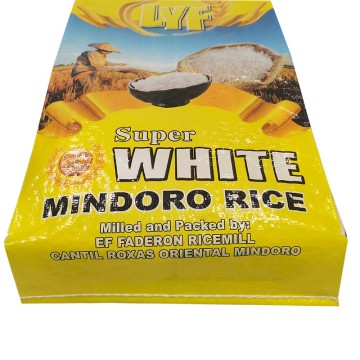
Three-side seal bags serve as the primary packaging format for rice, wheat, oats, and specialty grains in retail and institutional markets. The bags' moisture barrier properties are critical for preventing spoilage and maintaining grain quality during storage. For organic and premium grain products, customized printing on three-side seal bags communicates quality attributes and certification information directly to consumers.
In emerging markets, smaller package sizes (500g-2kg) in three-side seal format are replacing traditional bulk sales, improving hygiene, reducing waste, and enabling brand development for agricultural cooperatives and processors.
Agricultural seeds require specialized packaging that maintains viability by controlling moisture levels and preventing contamination. Three-side seal bags with aluminum foil barriers provide the hermetic sealing necessary for long-term seed storage. The packaging also serves as a carrier for critical information including variety details, planting instructions, and treatment specifications.
The seed industry increasingly demands tamper-evident features and traceability codes on packaging, requirements that three-side seal bags can accommodate through specialized printing and sealing technologies.
The dried fruit and nut sector represents a high-growth application for three-side seal bags, driven by increasing consumer demand for healthy snacking options. These products require packaging that preserves freshness, prevents oil oxidation, and maintains texture. Modern three-side seal bags with modified atmosphere packaging (MAP) capabilities extend shelf life significantly while maintaining product quality.
Transparent window features in three-side seal bags allow consumers to view product quality while maintaining protective barriers, an important consideration for premium dried fruit and nut products.
Agricultural feed products benefit from the durability and barrier properties of three-side seal bags. Heavy-duty constructions can accommodate weights up to 25kg, while maintaining seal integrity under challenging storage conditions. The bags protect nutritional value by preventing moisture absorption and oxidation of vitamins and fats.
For premium pet food segments, three-side seal bags with resealable zippers combine convenience with preservation, addressing consumer demands for portion control and freshness maintenance.
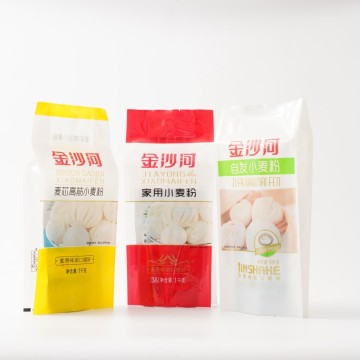
Flour, sugar, salt, and other processed agricultural products utilize three-side seal bags extensively across retail and food service channels. The packaging must withstand the abrasive nature of these products while preventing moisture ingress that could cause caking or spoilage.
Industrial-scale three-side seal bags (10-50kg) serve as efficient intermediate bulk containers for processed commodities, offering better handling characteristics and hygiene compared to traditional sack packaging.
Recent technological advances are significantly enhancing the capabilities of three-side seal bags for agricultural applications:
Micro-Perforation Technology: Controlled micro-perforations allow respiration of fresh agricultural products while maintaining protective barriers against contamination. This technology is particularly valuable for packaging seeds and certain dried products that benefit from minimal air exchange.
Active Packaging Systems: Integration of oxygen scavengers, moisture absorbers, and antimicrobial agents within three-side seal bag structures extends product shelf life and maintains quality without chemical preservatives. These active systems are increasingly important for organic agricultural products where synthetic preservatives are prohibited.
High-Performance Sealants: New sealant formulations provide superior hot-tack strength, enabling faster production speeds and more reliable seals even when packaging dusty agricultural products that can interfere with traditional sealing processes.
Laser Scoring and Easy-Open Features: Precision laser technology creates controlled tear paths that improve package opening convenience without compromising seal integrity during distribution. This addresses a common consumer complaint about difficult-to-open agricultural product packaging.
The adoption and specification of three-side seal bags vary significantly across global agricultural markets:
Developed Markets: North America and Europe emphasize sustainability, convenience features, and premium presentation. Regulations regarding food contact materials and recyclability drive material selection and design choices. Consumer preferences favor resealable options and clear product visibility.
Emerging Markets: Asia-Pacific and Latin American regions prioritize cost-effectiveness and basic protection. However, rapid urbanization and growing middle classes are driving demand for more sophisticated packaging solutions. Local agricultural producers increasingly recognize that quality packaging enables premium pricing and market differentiation.
Export-Oriented Production: Agricultural exporters must navigate varying international packaging standards, labeling requirements, and phytosanitary regulations. Three-side seal bags offer the flexibility to accommodate multiple language printing, certification marks, and traceability information required for international trade.
The agricultural packaging sector faces increasing pressure to demonstrate environmental responsibility. Three-side seal bag manufacturers are responding through multiple sustainability initiatives:
Material Reduction: Advanced film technologies enable down-gauging—using thinner materials while maintaining protective properties. This reduces plastic consumption and waste generation without compromising package performance.
Mono-Material Structures: Development of all-polyethylene or all-polypropylene constructions facilitates recycling by eliminating the need to separate different plastic types. These mono-material bags maintain adequate barrier properties for many agricultural applications.
Bio-Based Materials: Films incorporating renewable content from agricultural sources (sugarcane polyethylene, corn-based PLA) reduce dependence on fossil resources while maintaining functionality. The agricultural sector's connection to renewable resources makes these materials particularly appropriate.
Design for Recycling: Packaging designs that facilitate consumer participation in recycling programs, including clear material identification, easy label removal, and compatibility with existing recycling infrastructure, are becoming industry standards.
The future of three-side seal bags in agricultural product handling will be shaped by several converging trends:
Digital Integration: Packaging will increasingly serve as a digital interface, connecting consumers with product origin information, recipes, sustainability credentials, and brand storytelling through smartphone-readable codes and augmented reality features.
Supply Chain Transparency: Blockchain-enabled traceability systems integrated into packaging will provide unprecedented visibility into agricultural supply chains, addressing consumer demands for transparency and enabling rapid response to quality issues.
Personalized Nutrition: As precision agriculture and personalized nutrition converge, packaging will need to accommodate smaller, customized product batches with variable formulations and targeted nutritional profiles.
Climate Adaptation: Packaging solutions will need to perform under increasingly variable climate conditions, protecting agricultural products from temperature extremes, humidity fluctuations, and other climate-related challenges.
For agricultural producers, processors, and distributors, three-side seal food bags represent more than simple containers—they are strategic tools for market access, brand building, and product quality assurance. As the agricultural sector continues to modernize and respond to global food security challenges, the role of advanced packaging solutions like three-side seal bags will only grow in importance.
The combination of proven functionality, economic efficiency, and continuous innovation positions three-side seal bags as an enduring solution for durable agricultural product handling across diverse applications and markets worldwide.