The Critical Role of Packaging in Preserving Pet Snack Freshness and Flavor
The global pet food industry is undergoing a significant transformation. Driven by the "pet humanization" trend, pet owners no longer treat their companion animals merely as domestic animals; they are core family members. This shift has led to a massive demand for premium, high-quality, and nutritionally dense pet treats and snacks. From freeze-dried raw meats and dehydrated jerky to organic biscuits and functional soft chews, pet food formulations have become highly sophisticated. However, the integrity of these premium ingredients is highly vulnerable to environmental factors. This is where the specialized Plastic Pet Snack Pouch plays a vital role. Engineered specifically for preserving food freshness and flavor, these modern flexible packaging solutions serve as the primary barrier protecting products from degradation.
To preserve flavor and freshness over an extended shelf life, pet snack packaging must perform multiple protective functions. It must block oxygen ingress to prevent lipid oxidation, restrict moisture movement to maintain texture, block UV light to prevent nutrient breakdown, and lock in the volatile aromatic compounds that make the food appealing to pets. Because pets rely heavily on their sense of smell, any loss of aroma or introduction of off-odors from packaging degradation can result in product rejection. Therefore, selecting the correct barrier film structure is essential for brand loyalty and product success.
Advanced Multi-Layer Co-Extrusion Technology
Modern pet food pouches utilize laminated structures where each layer serves a specific function. By combining PET, VMPET, AL, and PE, we achieve near-zero oxygen and moisture transmission rates, ensuring long-term product freshness.
Advanced Material Science: The Multi-Layer Barrier Architecture
Single-layer plastics are highly permeable to gases and moisture, making them unsuitable for food preservation. Consequently, packaging engineers utilize co-extruded or laminated multi-layer films, where each layer serves a distinct functional purpose:
- Outer Layer (Print Web): Typically made of Biaxially Oriented Polyethylene Terephthalate (BOPET) or Biaxially Oriented Polypropylene (BOPP). This layer provides structural rigidity, high thermal resistance for the sealing process, and a smooth surface for high-definition gravure or flexographic printing.
- Barrier Core Layer: This is the heart of the preservation system. Materials such as Aluminum Foil (AL), Metallized PET (VMPET), or Ethylene Vinyl Alcohol (EVOH) are deployed to create an impermeable barrier. These materials reduce the Oxygen Transmission Rate (OTR) and Moisture Vapor Transmission Rate (MVTR) to near-zero levels. By preventing oxygen ingress, they inhibit aerobic bacterial growth and prevent the oxidation of fats and oils—a primary cause of rancidity in pet treats. Simultaneously, they keep moisture out, preventing crisp treats from becoming soggy, while ensuring soft treats retain their essential moisture content.
- Inner Sealant Layer: Generally made of Cast Polyethylene (CPE) or Linear Low-Density Polyethylene (LLDPE). This layer is formulated for direct food contact and melts at specific temperatures to form airtight, high-strength hermetic seals. These seals are resilient enough to withstand shipping pressures and prevent micro-channel leaks.
Commercial and Industrial Trends in Pet Food Packaging
From a commercial perspective, the shift from rigid packaging (such as metal cans or plastic tubs) to flexible plastic pouches has revolutionized supply chain logistics and retail display. Flexible pouches are lightweight, reducing shipping costs and the overall carbon footprint associated with transportation. In a warehouse setting, unfilled pouches occupy up to 90% less space than rigid containers, optimizing storage efficiency.
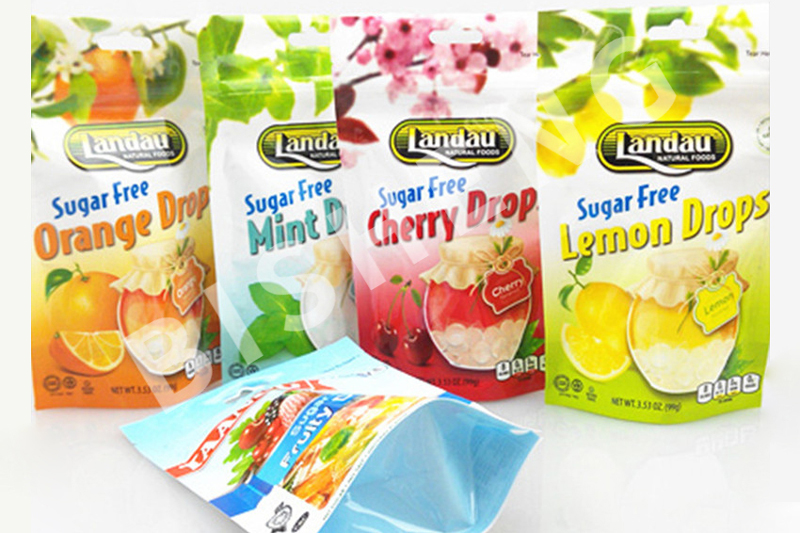
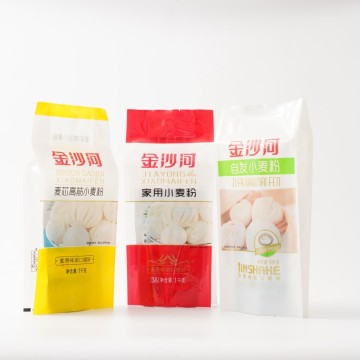
Furthermore, retail shelves demand high visual impact. The flat-bottom and stand-up pouch formats offer excellent billboard space for branding. With the integration of matte finishes, spot UV coatings, and metallic highlights, pet food brands can convey a premium brand image that justifies a higher price point.
Compliance with international food safety standards is non-negotiable in this sector. Reputable manufacturers, such as Shandong Jike International Trade Co., Ltd., adhere strictly to global benchmarks. Operating under certifications such as ISO 9001 (Quality Management), ISO 14001 (Environmental Management), and ISO 45001 (Occupational Health and Safety), alongside local QS food safety certifications, ensures that every pouch produced is chemically inert, free from contaminants, and fully compliant with FDA regulations for food contact.
The Shift Toward Mono-Material Recyclability
To meet global sustainability goals, the packaging industry is transitioning to mono-material PE structures. These high-barrier, recyclable pouches offer the same shelf-life protection as traditional multi-material laminates while complying with modern circular economy standards.
Deep Application Scenarios: Tailoring Pouches to Specific Pet Treats
Different pet treats require different physical environments. The versatility of plastic pet snack pouches allows for tailored packaging designs:
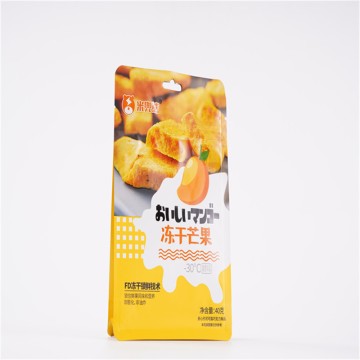
1. Freeze-Dried Raw Snacks: These products are extremely hygroscopic (moisture-sensitive) and fragile. They require rigid-feel quad-seal or flat-bottom pouches with high-barrier aluminum foil layers to prevent moisture absorption and physical crushing. Nitrogen flushing is also commonly used to displace oxygen before sealing.
2. Semi-Moist Jerky & Soft Chews: These treats contain humectants to keep them chewy. The packaging must prevent moisture loss to stop the treats from drying out and hardening. Resealable zippers (such as press-to-close or hook-and-loop styles) are crucial here, allowing consumers to open and securely reclose the pouch multiple times.
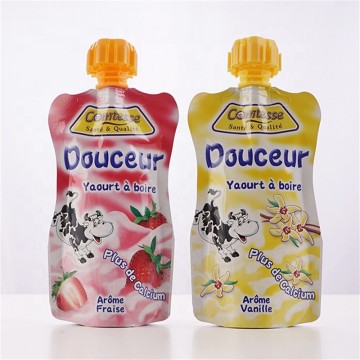
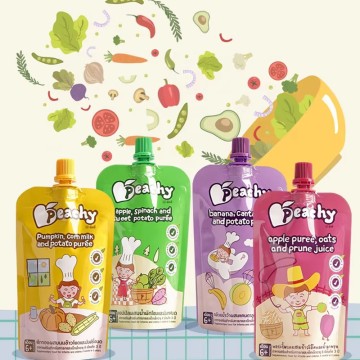
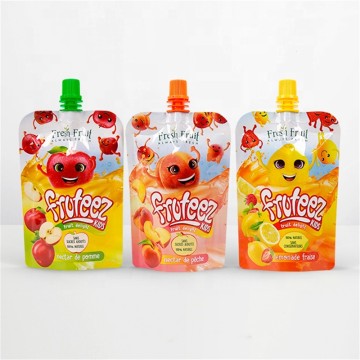
3. Liquid Purees & Creamy Treats: The rise of lickable cat treats and liquid toppers has popularized the Spout Pouch. These pouches feature integrated plastic spouts and tamper-evident caps, providing leak-proof storage and controlled dispensing without the need for additional utensils.
4. Bulk Kibble & Large Snack Packs: For larger volumes (1kg to 5kg+), flat-bottom pouches with integrated side gussets and sturdy plastic handles offer both high volume capacity and ergonomic handling for consumers.
Manufacturing Excellence and Quality Assurance at Shandong Jike
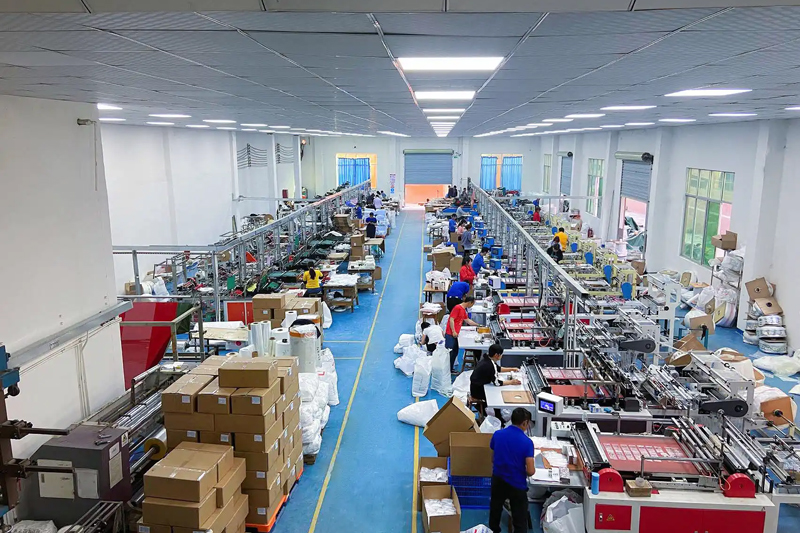
Achieving consistent barrier performance requires rigorous quality control throughout the production cycle. At Shandong Jike, the manufacturing process begins with the careful selection of food-grade resins. Advanced multi-layer co-extrusion and high-speed solventless lamination machines ensure that the barrier layers are uniform and free of pinholes.
During the bag-making phase, state-of-the-art heat-sealing equipment precisely controls temperature, pressure, and dwell time. This guarantees that the seals can withstand the stresses of high-speed filling lines and subsequent transit. Standardized tests, including tensile strength tests, burst tests, and OTR/MVTR analysis, are conducted continuously to verify that every batch meets the stringent demands of global pet food brands.