Commercial Paradigm Shift: The Evolution of HDPE Woven Bags in Retail-Ready Food Branding
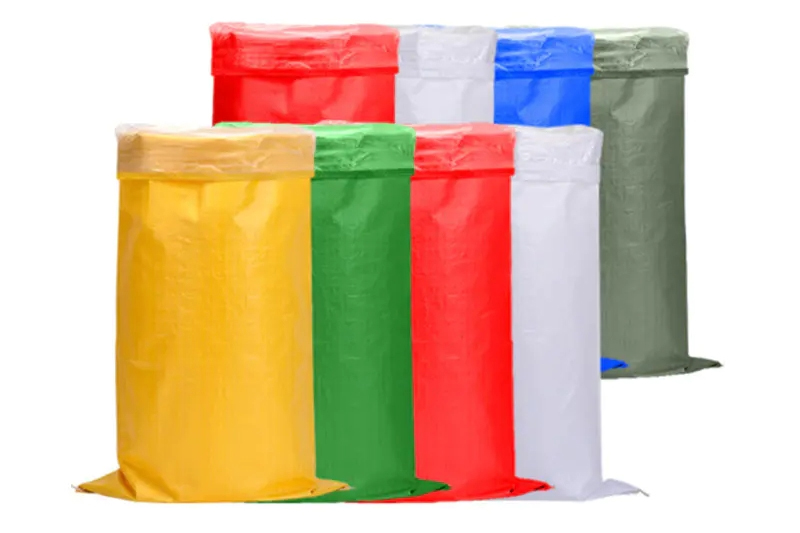
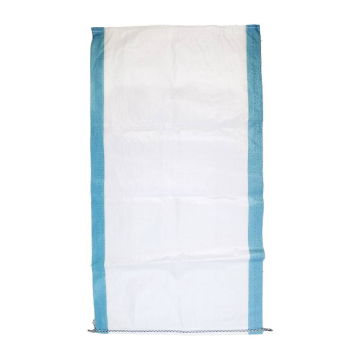
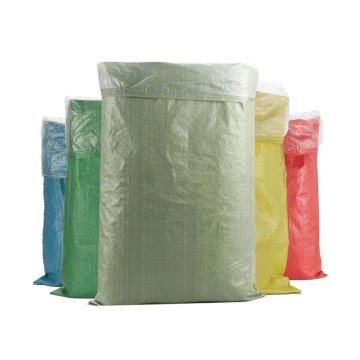
In the contemporary global food manufacturing and consumer packaged goods (CPG) ecosystem, packaging serves a dual function: it is both a critical preservation fortress and the primary vehicle for point-of-sale brand equity. Traditionally, high-density polyethylene (HDPE) and polypropylene (PP) woven sacks were perceived purely as industrial bulk shipping vessels—utilitarian containers engineered for raw grains, sugar, animal feed, and bulk agricultural commodities. However, rapid shifts in hypermarket merchandising, club-store warehousing models (such as Costco and Sam's Club), and cross-border logistics have driven a technological revolution. Today, the HDPE woven bag for retail-ready printed food branding has emerged as the premier hybrid solution, bridging the gap between heavy-duty structural integrity and premium photographic aesthetics.
Retail-Ready Packaging (RRP) mandates that secondary and primary containers transition seamlessly from the pallet to the store shelf without intermediate repacking. Food brands now require primary bulk sacks (ranging from 2.5kg, 5kg, 10kg, up to 25kg) that display flawless multi-color branding, resist shelf-life degrading humidity, prevent oil migration, and withstand rigorous automated distribution hubs. By pairing micro-extruded high-density polymer tapes with biaxially oriented polypropylene (BOPP) laminated barrier films, modern packaging engineers have eliminated the historical tradeoff between structural durability and graphic fidelity.
Material Science & Structural Architecture: Why HDPE Surpasses Conventional Substrates
The performance superiority of HDPE woven food bags lies in polymer molecular orientation and multi-layer lamination engineering. High-Density Polyethylene features a linear polymer chain with minimal branching, providing higher intermolecular forces and tensile strength compared to low-density polymers or unreinforced single-web films.
Biaxial Molecular Orientation
During the extrusion and tape-stretching phase, HDPE slit films are subjected to controlled heat-stretching ratios (typically 1:6 to 1:8). This aligns polymer chains unidirectionally, providing tensile strengths exceeding 0.45 GPa while maintaining flexural resilience in cold storage.
Multi-Layer Sandwich Lamination
Our packaging utilizes a 3-in-1 composite structure: Outer Layer of reverse-printed BOPP film (12–18 microns), Middle Layer of high-adhesion extruded PE bonding resin (15–20 g/m²), and Inner Core of circular woven HDPE matrix (60–120 g/m²).
Moisture & Gas Barrier Protection
HDPE possesses naturally superior moisture vapor barrier properties (MVTR < 5 g/m²/24h). When paired with metallized BOPP or aluminum oxide coatings, oxygen transmission rates (OTR) are curtailed, preventing the oxidation of fats in premium pet food and cereals.
Puncture & Drop Resistance
Unlike paper multiwall bags that rupture upon drop impacts or puncture easily against sharp grain husks, the interwoven HDPE lattice dissipates kinetic energy across the entire textile weave, ensuring zero burst rates during pallet stacking.
High-Definition Printing Technologies for Direct-to-Consumer Food Branding
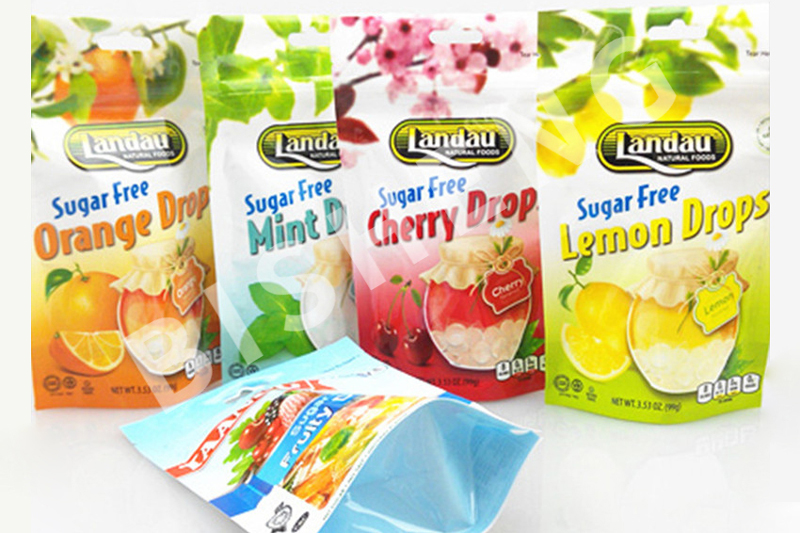
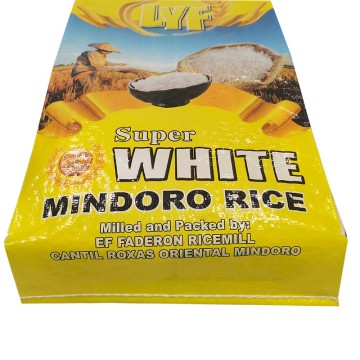
In retail environments, consumer purchasing decisions occur within an average of three seconds. A dull, generic woven sack conveys industrial utility rather than food quality. To command premium retail pricing, modern food brands deploy high-definition rotogravure reverse printing onto corona-treated BOPP films before thermal lamination to the HDPE woven fabric.
This manufacturing sequence offers distinct competitive advantages:
- Sub-Surface Image Protection: Because the ink is applied to the reverse (inside) face of the transparent BOPP film, the printed artwork is completely shielded from exterior abrasion, moisture, grease, and ultraviolet sunlight. Even after thousands of miles of transit, brand graphics remain immaculately glossy.
- Photorealistic 10-Color Capability: Utilizing advanced electronic cylinder engraving, our rotogravure lines achieve screen rulings up to 175–200 LPI (lines per inch), producing vibrant color gradients, accurate flesh tones, metallic foils, and razor-sharp nutritional data panels.
- Integrated Gloss, Matte & Holographic Finishes: Brands can select localized matte finishes with spot-UV gloss highlights, metallic pearlizing effects, or anti-counterfeiting holographic strips to enhance brand prestige on the retail shelf.
- Smart Data Matrix & QR Code Integration: Automated traceability requires flawless scanning. Reverse gravure printing prevents barcode distortion, facilitating farm-to-fork batch tracking, GS1 digital links, and consumer smartphone scanning for provenance storytelling.
In-Depth Application Scenarios Across the Food Industry
The versatile engineering of printed HDPE woven bags enables deployment across demanding segments of the modern food and agro-industrial sectors:
1. Premium Grains, Jasmine Rice & Basmati Packaging (5kg to 25kg)
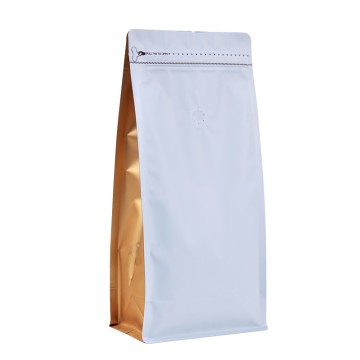
High-end rice varieties demand strict moisture regulation to avoid mold growth while preventing aroma loss. HDPE woven bags laminated with BOPP films provide an airtight barrier that seals in the volatile aroma compounds of aged Basmati or Thai Jasmine rice. Equipped with easy-carry punch handles, reinforced top zippers, and block-bottom configurations, these bags stand upright on retail supermarket shelves like giant display pouches.
2. Ultra-Premium Pet Nutrition, Dog Food & Cat Kibble
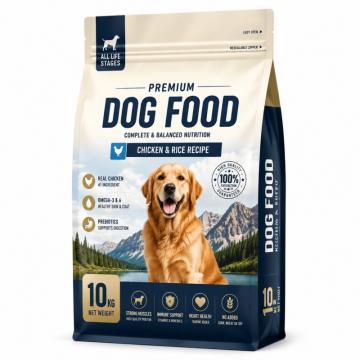
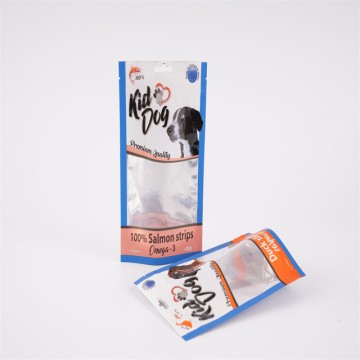
Dry pet food contains high percentages of animal lipids and volatile flavor enhancers. Standard woven bags suffer from oil seepage ("grease bleed"), creating unsightly dark stains on the shelf. Our HDPE food-grade bags incorporate specialized co-extruded EVOH/PE barrier laminates and grease-resistant coatings, ensuring 100% lipid containment, extended freshness, and airtight slider-zipper reclosability for pet owners.
3. Commercial Bakery Flour, Bakery Premixes & Starches
Flour and starch packaging presents unique challenges: air trapped during high-speed filling must escape without allowing powder leakage or ambient moisture ingress. We engineer micro-perforation systems with nano-porous vent labyrinths across the woven HDPE surface, enabling rapid de-aeration on automated filling lines while maintaining absolute insect and moisture barrier performance.
4. Organic Pulses, Legumes, Seeds & Wholesale Dried Fruits
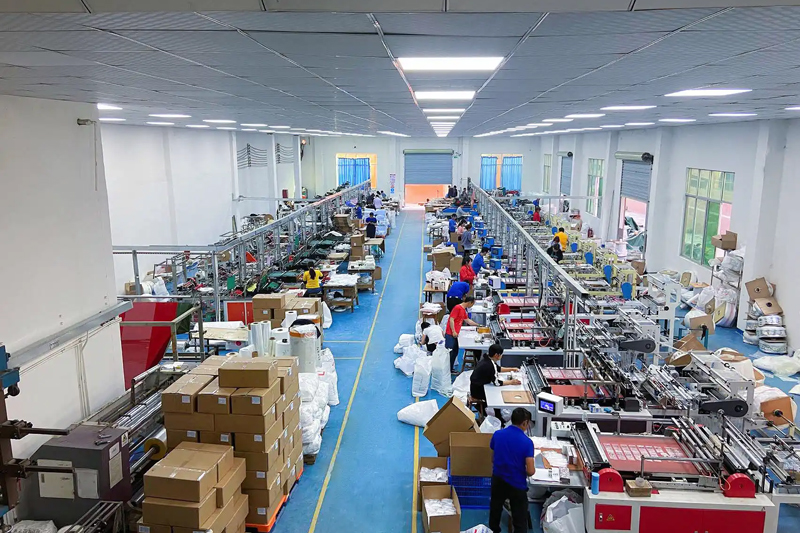
Organic certification mandates zero chemical contamination. Our cleanroom manufacturing lines use strictly solvent-free water-based or food-grade polyurethane adhesives with zero aromatic amine migration, ensuring compliance with strict European Commission (EU No 10/2011) and US FDA 21 CFR 177.1520 food contact regulations.
Sustainable Circular Economy: Monomaterial Recyclability & Environmental Imperatives
As legislative frameworks worldwide (such as the EU Packaging and Packaging Waste Regulation - PPWR) penalize complex non-recyclable multi-material composites, the packaging sector is rapidly transitioning toward Monomaterial All-Polyolefin Structures.
Traditional multi-wall paper bags laminated with aluminum and PVC cannot be processed in standard recycling streams and end up in municipal landfills. Conversely, our forward-looking HDPE woven packaging systems can be engineered as 100% Polyethylene/Polypropylene monomaterial compositions (HDPE Woven Core + PE Tie Layer + HDPE Film). This permits full compatibility with standard SPI Code 2 (HDPE) or Code 5 (PP) post-consumer recycling facilities, dramatically lowering carbon footprint, supporting closed-loop circularity, and empowering food brands to fulfill their ESG sustainability commitments.
Smart Packaging Integrations: The Future of Retail-Ready Food Merchandising
Looking beyond 2026, intelligent packaging technologies are merging directly with flexible woven fabrics. Smart indicators—such as RFID micro-tags woven into bag seams, time-temperature indicator (TTI) ink patches, and dynamic freshness sensors—allow distributors to monitor grain and pet food viability in real-time. Automated robotic depalletizers utilize machine-vision scannable edge prints on HDPE bags to rapidly sort, stack, and restock warehouse aisles without human intervention.