In the rapidly growing world of packaging, picking the right Woven Sack really matters more than you might think. I mean, John Smith from GreenPack Industries once said, “The right Woven Sack can make or break your supply chain efficiency,” and honestly, that’s a pretty solid point. It just goes to show how crucial it is to make smart choices here.
When you're choosing a Woven Sack, it's good to keep in mind things like the material, size, and how strong it needs to be for your products. These details can really affect how long your goods last and how much you end up spending on shipping. The options out there can be kinda overwhelming, too. Sometimes, I think folks forget that durability is way more important than just how cool it looks.
You’ve gotta think it all through, seriously. Every decision has its pros and cons. Will those sacks hold up when you pack them tight? Can they handle tough environmental conditions? Looking back at what you’ve experienced before can actually help you make better calls. At the end of the day, understanding what you really need is the key to finding that perfect Woven Sack for your business.
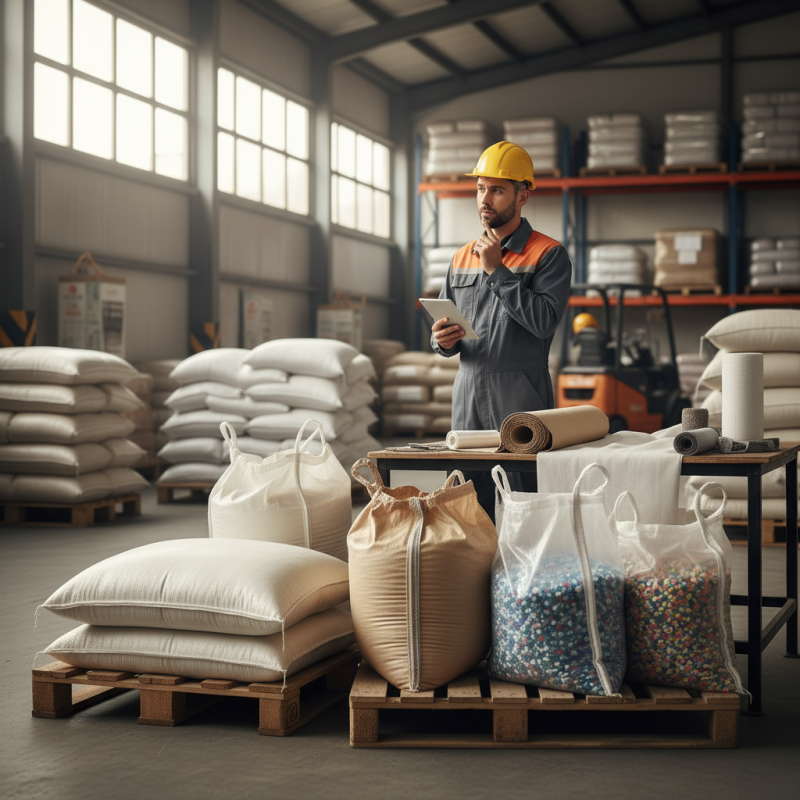
Understanding Woven Sacks: Types and Materials Available
When choosing a woven sack, understanding the types and materials is crucial. Woven sacks come in various forms. They are commonly made of polypropylene, jute, or cotton. Each material has its unique characteristics.
Polypropylene sacks are lightweight and durable. Jute sacks are biodegradable but less water-resistant. Cotton sacks are soft and versatile but may not offer the same protection.
Tips: Consider the sack's weight capacity. Heavy-duty options are better for bulk items. Also, consider your specific needs. Will the sack see outdoor use? If so, it’s wise to choose a water-resistant option.
Different woven sacks are ideal for specific applications. For instance, agricultural products often use jute for its eco-friendliness. However, a polypropylene bag might be better for storage. Some sacks are woven tightly, while others have a looser weave for ventilation. Assessing these factors will help in making an informed choice. Don't forget to check for quality. An imperfect weave can lead to tears and failures during use.
Key Factors to Consider When Choosing Woven Sacks
When choosing woven sacks, consider several key factors. The material is essential. Woven sacks can be made from polypropylene or other synthetic fibers. Each type has unique strengths. For example, polypropylene is durable and resistant to moisture. However, it may not be suitable for all applications.
Pay attention to the size and capacity of the sacks. Sacks come in various dimensions. Selecting the right size will ensure efficient storage and transport. Too small? You risk overloading and damaging the sack. Too large? Space and material may be wasted.
Next, look at the weave type. Different weaves offer varied levels of strength and flexibility. A tighter weave may be necessary for heavy materials. A looser weave might suffice for lighter items. Also, consider whether you need printed or unprinted sacks. Printed options can be useful for branding but may be more expensive. However, weigh the cost against potential marketing benefits. Choosing the best woven sack isn't always straightforward and might require some trial and error.
Assessing Strength and Durability in Woven Sacks
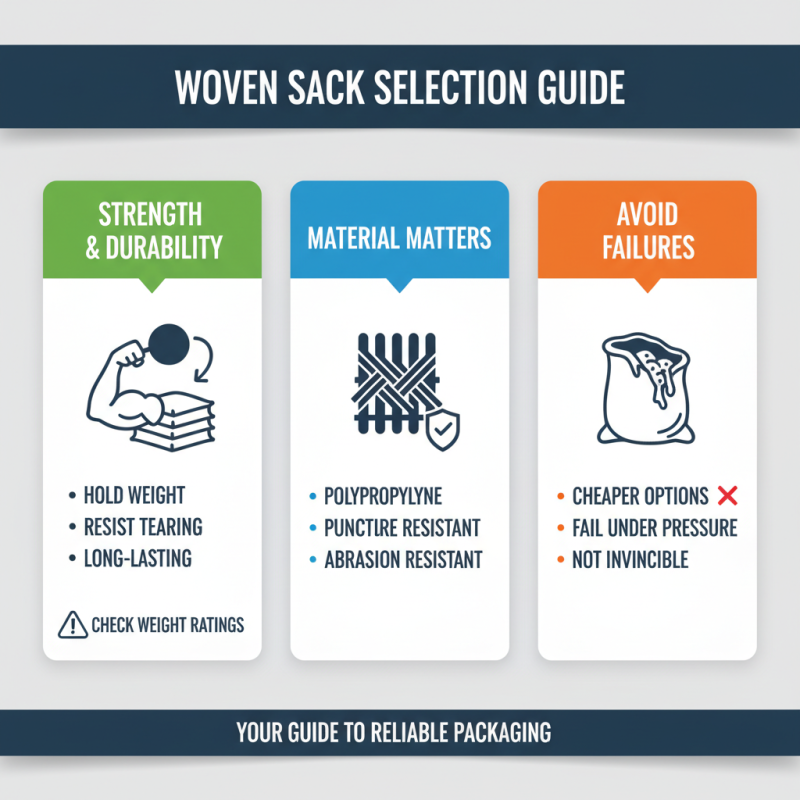
When selecting a woven sack, strength and durability are critical factors. A sack's ability to hold weight without tearing is essential. Look for materials like polypropylene for robust options. These sacks can resist punctures and abrasions. They are not invincible, though. Some cheaper options may fail under pressure. Always check weight ratings provided.
Testing the seams is also vital. Poor stitching can lead to failures over time. Consider reinforcing corners, where pressure is highest. A well-stitched sack will endure more. Observe the fabric weave. Tighter weaves typically enhance durability. You might think visual appeal matters more, but strength is key.
Conduct field tests if possible. Load the sack with intended materials and assess its performance. Expect variations in quality. Some woven sacks perform better in specific conditions. Don’t rely solely on appearances. It's wise to account for both environmental factors and usage frequency. Ultimately, the right choice balances durability with practical needs.
Evaluating Size and Capacity for Your Specific Needs
When selecting woven sacks, size and capacity are crucial considerations. According to industry data, around 70% of users report challenges with mismatched sizes. Choosing the right dimensions ensures efficiency in storage and transport. For example, a sack holding 25 kilograms is typically ideal for grain products. Smaller options might be suitable for retail packaging, while larger sacks cater to bulk storage needs.
Understanding your specific requirements is vital. The Agricultural Woven Bags Report indicates that over 65% of producers prefer custom sizes. It's essential to assess both the volume of products and the physical space available. Many buyers overlook the importance of sack dimensions, leading to wasted materials. Sizing challenges may contribute to operational inefficiencies, with businesses experiencing over 15% excess costs due to inadequate sizing.
Evaluating capacity goes hand in hand with considering weight limits. The right sack should accommodate expected loads without compromising structural integrity. Unsuitable sizes can result in transportation setbacks. Without proper analysis, companies risk delays and financial losses. This highlights the need for thorough examination before selecting woven sacks tailored to specific needs.
Cost vs. Quality: Finding the Right Balance in Woven Sacks
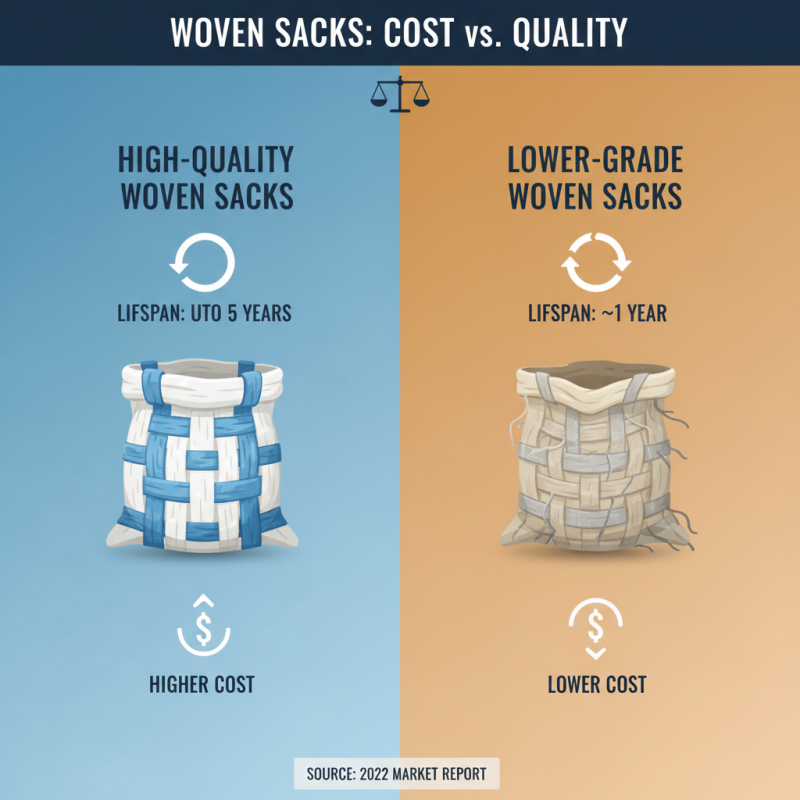
When selecting woven sacks, balancing cost and quality is crucial. Woven sacks come in various materials, each influencing durability and pricing. A 2022 market report revealed that high-quality woven sacks can last up to 5 years, while lower-grade options may only endure for a year. The longevity of these sacks often directly correlates to their cost.
Tip: Always analyze the specific needs of your application. If quality is a priority, consider investing more upfront. A cheaper sack could lead to frequent replacements, escalating costs over time. However, it’s essential to assess whether you genuinely require premium materials for your applications.
Some users might feel tempted by the lowest price. While it's appealing, this choice can backfire. A September 2023 survey indicated that nearly 30% of respondents experienced product damage due to poor-quality sacks. Choose wisely to avoid this waste.
Tip: Research supplier reputations before making decisions. Finding the right balance between cost and quality involves understanding your needs thoroughly. Assess both short-term savings and long-term efficiency.
Sustainability and Environmental Impact of Woven Sacks
Woven sacks are becoming increasingly popular due to their sustainability. Made from natural fibers, they decompose more easily than plastic bags. Their design allows for reusability, making them an eco-friendly option. However, not all woven sacks are created equal.
When choosing a woven sack, consider the material quality. Look for durable fibers that withstand wear and tear. While jute and cotton are common, they can vary in sustainability. Some production processes may still involve harmful chemicals. Be aware of certifications that ensure environmental standards.
**Tips:** Check if the sack is biodegradable. Look for minimal packaging when purchasing. Avoid options that use synthetic blends.
Evaluate how much you need the sack for. Smaller sacks may work for lightweight items, while larger ones are suitable for bulk. Yet, think about long-term use, not just immediate needs. Sometimes, the cheaper option could lead to more waste. Always balance your choices with their environmental impact.
2026 Sustainability and Environmental Impact of Woven Sacks
Maintaining and Caring for Your Woven Sacks for Longevity
Woven sacks are essential in various industries. Proper care is vital for their longevity. According to industry reports, woven sacks can last three to five years if maintained properly. However, neglect can significantly reduce their lifespan.
To maintain woven sacks, start with regular cleaning. Dust and dirt can accumulate quickly. It is recommended to clean them with a mild detergent and water. Avoid harsh chemicals, as they can weaken the fibers. After washing, ensure the sacks dry completely before storage. Moisture can lead to mold and deterioration.
Inspecting woven sacks regularly is crucial. Look for signs of wear and tear. Small tears can worsen if ignored. Reinforce these areas to extend the bag's life. Additionally, storing woven sacks in a cool, dry place helps prevent damage. Industry findings indicate that inappropriate storage can reduce a sack's durability by up to 40%. Regular maintenance may seem tedious, but it ultimately saves costs and resources.
2026 How to Choose the Best Woven Sack for Your Needs? - Maintaining and Caring for Your Woven Sacks for Longevity
| Feature |
Description |
Maintenance Tips |
Expected Longevity |
| Material |
Made from woven polypropylene or jute for durability. |
Avoid exposure to harsh chemicals and UV light. |
3-5 years with proper care. |
| Weight Capacity |
Can hold between 25 to 50 kg depending on the size. |
Do not overload to avoid tearing. |
Varies, up to 5-10 years with light usage. |
| Closure Type |
Open-mouth, bottom-sealed, or with a drawstring. |
Keep closures clean and check for wear regularly. |
5+ years if properly handled. |
| Design |
Can be custom printed or plain, suitable for branding. |
Wash with mild soap if necessary, avoid abrasive materials. |
3-5 years or more with proper washing. |
| Climate Resistance |
Some woven sacks are designed to withstand wet conditions. |
Store in a dry area to prevent mold. |
3 years in humid environments. |
Conclusion
When choosing the best woven sack for your needs, it's essential to understand the various types and materials available. Key factors to consider include strength, durability, size, and capacity, ensuring that the sack meets your specific requirements. Assessing these attributes can help you find the right balance between cost and quality, crucial for making a prudent investment.
Furthermore, sustainability and the environmental impact of woven sacks are increasingly important in today's market. By selecting eco-friendly options and maintaining your sacks properly, you can enhance their longevity and reduce waste. Ultimately, a well-chosen woven sack will serve its purpose effectively while contributing positively to environmental sustainability.