Welcome to our company

Leave Your Message
0%

China’s eco-friendly PP woven bag industry is really starting to shift gears. It’s no longer just about making tons of cheap bags—they’re now paying attention to recycled materials, tracing where the raw stuff comes from, how much energy the factories use, and what options there are once the bags are done with. This change actually matters because, at the end of the day, packaging still needs to do its job—protecting food, grains, chemicals, and agricultural goods during transport, you know?

According to the OECD’s Global Plastics Outlook, global plastic waste hit around 353 million tonnes back in 2019, but only about 9% of that actually got recycled. And UNEP’s Turning off the Tap report says that with the right efforts, we could cut plastic pollution by up to 80% by 2040. That’s pretty significant, but it doesn’t mean every woven bag out there is officially sustainable. Instead, it raises the bar—they’re now expected to meet stricter standards. A sturdy polypropylene bag might keep your stuff safe and prevent loss, but how eco-friendly it really is depends on the design, how it’s collected, and how well it can be recovered at the end.

Dr. Chris DeArmitt, who knows his way around polymers and heads up Phantom Plastics, has a good point: “Plastic itself isn’t the root problem, it’s the waste.” That kind of perspective shapes what we look for in this guide to China’s top 10 eco-friendly PP woven bag manufacturers. We’re checking out things like whether they use recycled PP, their weaving quality, if they use water-based or eco-friendly inks, whether they’ve been audited, and what certifications they’ve got—stuff backed by real evidence. And yes, we also pay attention to the specialized formats, like the eco-friendly three-side sealed food bags. Because, let’s be honest, things like seal strength and food contact safety aren’t just minor details—they matter a lot.

Remember, no one’s ranking is set in stone. Companies can change their claims, and sometimes the data they provide about sustainability isn’t complete. So, it’s good to keep that in mind. Still, the list below gives a pretty solid idea of what to look for—quality, environmental practices, experience in exporting, and some practical innovations—pretty helpful when comparing options in the global woven packaging scene.
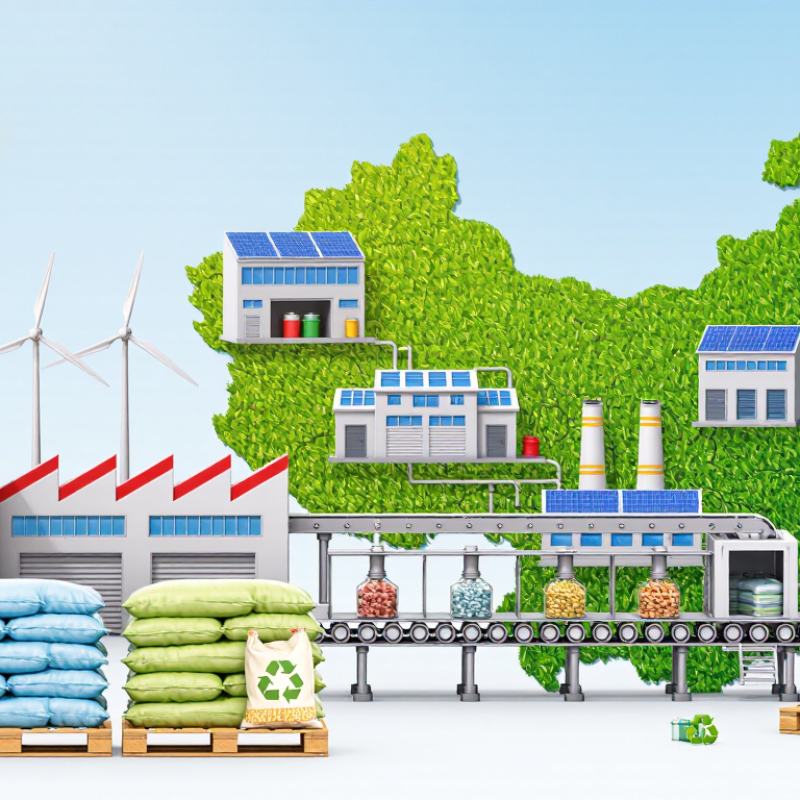
China Top 10 Eco Friendly PP Woven Bag Manufacturers

What Are Eco-Friendly PP Woven Bags?

What Are Eco-Friendly PP Woven Bags?

Eco-friendly PP woven bags are made from polypropylene tapes woven into a strong, reusable fabric. They commonly carry grains, animal feed, chemicals, or construction materials. Their environmental value depends on design and use, not the word “eco.” A durable bag used many times can replace several single-use sacks. However, polypropylene is still plastic. The OECD’s Global Plastics Outlook reports that global plastic waste reached 353 million tonnes in 2019, while only 9% was recycled. That figure deserves attention.

A more responsible PP woven bag may contain verified recycled content, use one main polymer, and avoid unnecessary laminated layers. Mono-material construction can simplify sorting and recycling. Clear recycling marks, water-based inks, and stitching that supports repair also improve practical performance. ISO 14021 warns that environmental claims should be specific and evidence-based. “Reusable” alone is not enough. In my experience, a strong bag often lasts longer, but poor collection systems can still send it to landfill. That is the uncomfortable gap between product design and real-world recovery. The UNEP report Turning off the Tap also identifies reuse, recycling, and better product design as key ways to reduce plastic pollution by 2040.

Tips: Ask for recycled-content evidence, test seam strength, and check whether local facilities accept PP. Calculate transport weight too. A lighter bag may reduce emissions, but weak fabric creates waste faster. Suppliers should provide life-cycle data, not only attractive green wording.

How to Evaluate Chinese PP Woven Bag Manufacturers

China’s top eco-friendly PP woven bag manufacturers should be judged by evidence, not attractive sustainability claims. The OECD Global Plastics Outlook reports that only 9% of global plastic waste was recycled in 2019. Therefore, request verified recycled-content records, resin purchase invoices, and batch-level traceability. A factory should also explain whether its bags use recycled PP, virgin PP, or a controlled blend.

During a supplier audit, inspect extrusion lines, looms, coating units, and wastewater controls. Ask for recent test reports covering tensile strength, seam strength, tear resistance, and heavy-metal limits. Independent laboratories provide stronger evidence than internal spreadsheets. ISO 14001 certification can indicate an environmental management system, but it does not prove every bag is environmentally superior. That distinction matters.

Check production consistency through samples from different lots. Measure fabric weight, handle dimensions, printing adhesion, and load performance. The World Bank’s What a Waste 2.0 projects municipal waste could reach 3.40 billion tonnes annually by 2050, making durability and reuse important evaluation factors. Still, I would not assume a thicker bag is greener; excessive material can increase impacts. Some suppliers may provide impressive samples, then change resin sources later. Require written specifications, corrective-action records, and pre-shipment inspections. Claims need checking.

China Top 10 Eco Friendly PP Woven Bag Manufacturers - How to Evaluate Chinese PP Woven Bag Manufacturers

No. Evaluation Dimension Suggested Weight Practical Benchmark Documents or Tests to Request Why It Matters for Eco-Friendly PP Woven Bags
1 Recycled PP Content 15% Clearly stated post-industrial or post-consumer recycled PP percentage; recycled content should be traceable by batch.
  • Material composition declaration
  • Supplier traceability records
  • Third-party recycled-content verification
  • ISO 14021-based claim documentation
Recycled PP can reduce demand for virgin polymer, but the percentage and source must be verified rather than accepted as an unsupported marketing claim.
2 Recyclability by Design 12% Prefer mono-material PP construction where the end use permits; minimize incompatible laminations, metalized films, and permanent mixed-material parts.
  • Layer and component specification
  • Ink, coating, tape, and handle details
  • Written recyclability statement
  • End-of-life guidance for the destination market
PP is thermoplastic and can be mechanically recycled, but mixed materials, heavy coatings, and contamination can reduce practical recyclability.
3 Environmental Management System 10% A current ISO 14001 certificate covering the relevant production site, or an equivalent independently audited environmental management system.
  • Certificate number and validity dates
  • Certified site address and scope
  • Recent surveillance-audit evidence
  • Waste, water, and energy procedures
ISO 14001 addresses systematic environmental management; it does not by itself guarantee a specific carbon reduction or recycled-content level.
4 Energy and Carbon Data 10% Site-level electricity, fuel, and production data reported in consistent units, with a defined reporting period and product-output denominator.
  • Energy bills or meter summaries
  • Carbon inventory methodology
  • Renewable-energy certificates, if claimed
  • Third-party carbon verification, where available
Production energy can be compared more fairly when reported per tonne of finished bags, while avoiding unsupported claims of “carbon neutrality.”
5 Product Quality and Load Safety 15% Written specifications for fabric denier, bag weight, seam strength, tensile strength, dimensional tolerance, and safe working load.
  • Pre-production sample and approved golden sample
  • Batch inspection reports
  • Tensile and seam-strength test results
  • ISO 21898 testing for flexible intermediate bulk containers, when applicable
Longer service life and fewer rejected bags can reduce material use over the product life cycle. ISO 21898 applies to FIBCs, not every woven bag type.
6 Chemical and Ink Control 10% Controlled use of pigments, masterbatch, inks, adhesives, and coatings, with restricted-substance requirements matched to the destination market.
  • Safety Data Sheets for relevant chemicals
  • Restricted-substance declaration
  • Migration testing for food-contact applications
  • Heavy-metal and solvent-control records
Chemical compliance depends on the application and importing country. General packaging compliance should not be confused with food-contact approval.
7 Food-Contact Suitability 8% For food packaging, materials and printing systems must comply with the applicable destination-market rules; suitability must be confirmed for the complete finished structure.
  • EU Framework Regulation (EC) No. 1935/2004 documentation, where applicable
  • Applicable EU plastics requirements, where applicable
  • U.S. FDA food-contact compliance statement, where applicable
  • Overall and specific migration test reports
A resin declaration alone is insufficient because inks, coatings, recycled content, and processing conditions can affect food-contact performance.
8 Waste and Water Management 8% Production scrap is segregated and returned to a controlled process where technically suitable; wastewater, dust, and solid waste are documented.
  • Scrap-recycling records
  • Waste-transfer documentation
  • Wastewater and emissions permits, where required
  • Factory environmental audit report
Closed-loop handling of clean process scrap can improve material efficiency, while contaminated waste requires controlled disposal or treatment.
9 Supply-Chain Traceability 7% The manufacturer can identify polymer source, recycled-content source, production batch, inspection result, and shipment records.
  • Batch and lot numbering system
  • Raw-material certificates
  • Incoming-material inspection records
  • Corrective-action and recall procedure
Traceability supports credible environmental claims and enables faster investigation when quality or compliance problems occur.
10 Supplier Transparency and Social Compliance 5% Verifiable factory address, production scope, subcontractor disclosure, worker-safety procedures, and an acceptance of independent audits.
  • Business license and factory profile
  • Independent factory-audit report
  • Occupational health and safety records
  • Subcontracting and capacity declaration
Transparent operations reduce sourcing risk and help distinguish actual manufacturing capability from unverified trading or brokering activity.

Note: PP is not biodegradable. “Eco-friendly” performance should therefore be assessed through verified recycled content, durability, material efficiency, responsible production, and realistic end-of-life recyclability rather than through a biodegradable claim alone.

China’s Top 10 Eco-Friendly PP Woven Bag Manufacturers

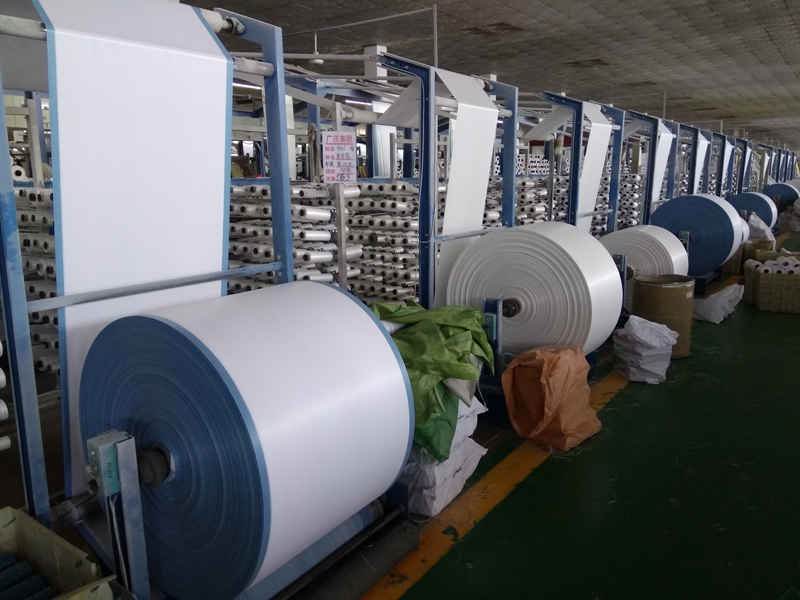
China’s Top 10 Eco-Friendly PP Woven Bag Manufacturers are gaining attention for practical, lower-impact packaging solutions. Their products commonly use polypropylene tapes woven into strong, lightweight fabric. This structure reduces material use without sacrificing load capacity. Factory experience matters here. Skilled teams control weaving tension, coating thickness, stitching strength, and handle placement.

A reliable manufacturer should provide clear material specifications and production records. Buyers can review recycled resin content, ink composition, and test results for tensile strength. Food-contact documentation is essential for pet food applications. The phrase Eco-Friendly Plastic Pet Food Packaging Bag reflects this growing demand, although material claims still require careful verification. Some factories offer recyclable mono-material designs, while others use laminated structures that may be harder to process after use. That difference matters.

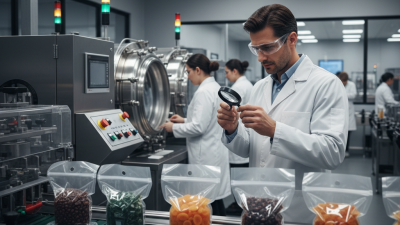
Manufacturing audits should examine dust control, worker training, wastewater handling, and energy management. On-site samples often reveal details that brochures miss. Check the seam corners. Inspect the inner lining. Ask whether color consistency remains stable between production batches. Even advanced factories can experience printing variation or occasional stitching defects. No bag is impact-free. Recycled content may affect appearance, strength, or food-contact suitability. A thoughtful supplier explains these limitations instead of hiding them. China’s leading manufacturers are better judged by traceable processes, measurable testing, and honest communication than by production volume alone.

Key Products and Customization Options

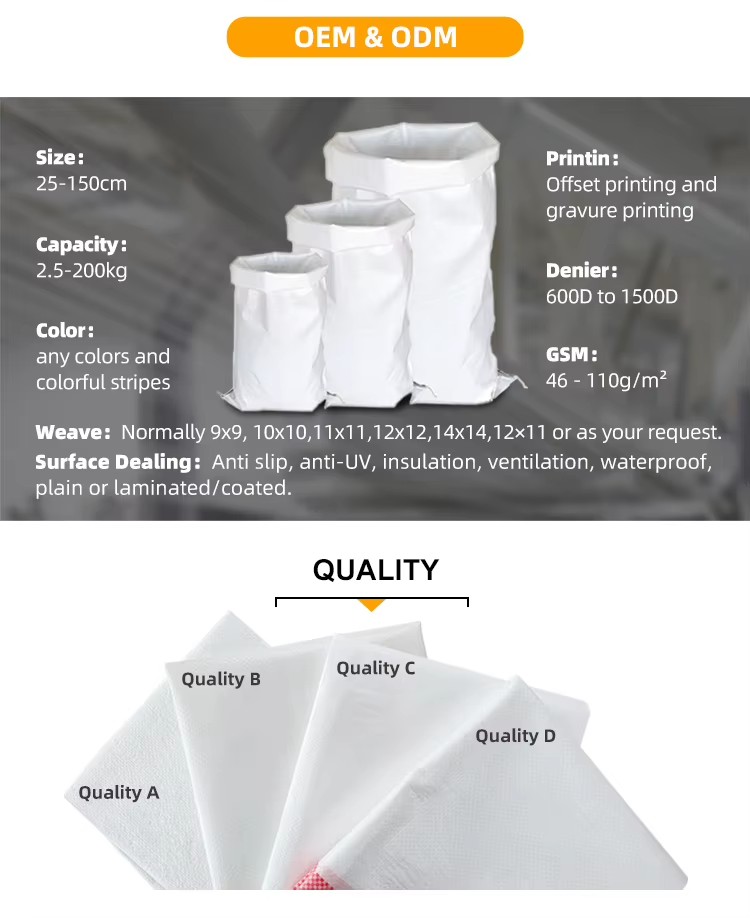
China’s leading eco-friendly PP woven sack manufacturers offer more than standard packaging. Their key products include sacks for grains, seeds, animal feed, building materials, and retail goods. An Eco-Friendly Woven Sack may contain recycled polypropylene, water-based ink, or a recyclable mono-material structure. These choices can reduce material waste and support repeated use. Yet recycled fibers may vary in strength. That trade-off needs testing.

Customization usually begins with size, fabric weight, and load capacity. Buyers can select flat or gusseted bottoms, stitched or heat-sealed seams, and open-mouth or valve designs. Handle bags improve carrying comfort for household products. Laminated surfaces can resist moisture and improve print clarity. For grain packaging, factories may offer food-contact materials and controlled odor levels. Flexographic printing supports logos, product details, and multiple colors. Small text still requires careful proofing.

Reliable manufacturers should provide material declarations, production samples, and test records. Useful checks include tensile strength, seam strength, drop resistance, and dimensional accuracy. In practical procurement, a sample often reveals weaknesses hidden in a quotation. Some sacks look attractive but split near the corners. That detail matters. Custom printing can also create extra waste when orders are too small. A simpler design, fewer colors, and accurate forecasts may reduce this problem. Factories with clear quality procedures can adjust fabric density and stitching after trial feedback.

Sustainable Materials and Production Practices

Choosing among China’s top 10 eco friendly PP woven bag manufacturers requires more than checking recycled claims. Sustainable materials should be traceable from resin pellets to finished bags. Manufacturers using recycled polypropylene can reduce virgin plastic demand when quality controls remain strong. Some facilities blend post-consumer content with new resin for better strength and food-contact safety. Production floors should show closed-loop water systems, efficient looms, and controlled scrap collection. Details matter. A small tear at the handle can waste an entire shipment.

Experienced buyers should request test reports for tensile strength, seam performance, odor, and migration limits. These records provide evidence beyond attractive sustainability language. Independent audits can verify energy use, wastewater handling, worker protections, and material origin. For Eco Friendly Food Bags, ink selection and cleanable inner surfaces also deserve attention. Water-based inks may lower solvent emissions, but their durability must be tested under moisture and friction. Recycling labels should match the actual bag structure. Otherwise, confusion follows.

A reliable manufacturer explains limitations openly. Recycled content can vary in color, texture, and processing behavior. That variation is not automatically a defect, but it needs documented tolerances. Factories can reduce waste by optimizing cutting layouts, reusing edge trim, and repairing looms promptly. Still, no process is perfect. A supplier that admits rejected batches and corrective actions often deserves closer technical review. Site visits, sample testing, and written specifications help buyers compare the top 10 manufacturers through measurable practices rather than marketing claims.

Quality Standards, Certifications, and Export Capabilities

China’s leading eco-friendly PP woven bag manufacturers follow controlled production standards. Their processes usually cover raw material inspection, extrusion, weaving, printing, lamination, and final packing. ISO 9001 supports consistent quality management. ISO 14001 shows structured environmental control. However, certification alone proves little. Buyers should check the certificate number, validity period, issuing body, and certified factory address.

Recycled content claims require careful verification. A valid GRS certificate can support recycled-material tracking across the supply chain. Test reports should identify the exact bag structure, coating, ink, and recycled percentage. For food packaging, manufacturers may need suitable food-contact testing for the destination market. Chemical compliance reports can also support requirements under relevant European or North American regulations. Ask for recent migration, tensile strength, seam strength, and heavy-metal test results.

Export capability appears in practical details. Experienced suppliers provide accurate packing lists, commercial invoices, material specifications, and shipment records. They should explain container loading clearly, including bag quantities, carton weight, pallet use, and moisture protection. Their quality team should retain production samples and investigate failed batches. This matters.

Some factories still rely on old reports or broad environmental language. That weakness deserves attention. Reusable bags are not automatically sustainable when their material, transport, and service life remain unclear. A reliable manufacturer can discuss these limits openly. Buyers should compare audit findings, factory communication, production capacity, and after-sales records before placing large export orders.

China Top 10 Eco Friendly PP Woven Bag Manufacturers: Quality Standards, Certifications, and Export Capabilities

Timeline of internationally recognized quality, environmental, food-safety, chemical-compliance, and recycled-material frameworks relevant to PP woven bag exports.

The chart uses the first publication or launch year of each framework. It is a standards reference, not a ranking of individual manufacturers or a claim that every supplier holds every certification.

Reference sources: ISO, European Commission REACH documentation, and Textile Exchange Global Recycled Standard records.

How to Choose the Right Manufacturer for Your Needs

Choosing among China’s top 10 eco friendly PP woven bag manufacturers requires more than comparing prices. Examine raw materials, production controls, and evidence behind environmental claims. OECD’s Global Plastics Outlook reports that only 9% of plastic waste was recycled globally in 2019. Therefore, ask whether the manufacturer uses verified recycled PP, designs recyclable bags, and controls production waste.

Request test reports for tensile strength, seam performance, food-contact suitability, and recycled content. ISO 14021 stresses that environmental claims should be clear, measurable, and supported by records. A reliable factory should provide batch samples, audit documents, and traceable material information. Visit the production site when possible. Check whether cutting scraps return to production or enter general waste. Small details matter, though factory conditions can change after an audit.

Tips: Compare at least three suppliers using the same specification sheet. Ask for a sample bag under real loading conditions, not only a polished catalogue sample. For Eco Friendly Bakery Bags, test flour dust, moisture exposure, printing adhesion, and stacking strength. Check minimum order quantities and delivery records. A low price may hide thinner fabric or inconsistent stitching. No checklist is perfect. Reconsider suppliers who avoid specific answers or offer vague “green” certificates.

PP Woven Sacks for Flour & Rice: Insights from Smithers’ Global Flexible Packaging Report to 2028

PP woven sacks remain a practical packaging solution for flour, rice, cassava, and other grain products as the global flexible packaging market develops toward 2028. Their woven polypropylene structure offers high tensile strength, reliable stacking performance, and resistance to handling damage during transportation and storage. For food processors and distributors, these features help support efficient supply chains while maintaining clean, secure product presentation.

Food-grade PP woven sacks can be supplied in common 25kg and 50kg formats, with optional PE liners to improve moisture protection and help preserve flour and grain quality in humid conditions. Custom printing allows manufacturers to display product information, handling instructions, and attractive graphics directly on the sack. This combination of durability, hygiene, and practical sizing makes the bags suitable for both retail distribution and bulk food processing operations.

For West African factories, OEM-printed polypropylene sacks offer flexible purchasing options and consistent factory-direct supply. Moisture-proof construction is especially valuable for rice, flour, and cassava products that may pass through multiple storage and transport stages. Different colors, dimensions, liner specifications, and printing layouts can be developed to match filling equipment, warehouse requirements, and local market preferences.

FAQS

How can I verify recycled content in PP woven bags?

Request recycled-content records, resin invoices, and batch-level traceability. Ask whether the bags use recycled, virgin, or blended material. Claims need checking.

Which factory areas should buyers inspect?

Inspect extrusion lines, looms, coating units, and stitching areas. Check wastewater controls, dust management, worker training, and energy records.

What product tests should a manufacturer provide?

Request recent independent tests for tensile strength, seam strength, tear resistance, and heavy-metal limits. Internal spreadsheets are weaker evidence.

Do environmental certificates prove every bag is sustainable?

No. Management certificates show structured systems, not perfect products. Check certificate validity, factory address, issuer, and covered activities.

How can buyers check production consistency?

Compare samples from different production lots. Measure fabric weight, handle size, printing adhesion, seam quality, and load performance. Small differences matter.

Is a thicker woven bag always more environmentally friendly?

Not necessarily. Extra material can increase environmental impacts. A durable, reusable design may perform better with less material.

What should be checked for pet food packaging?

Review food-contact documents for the destination market. Check the inner lining, coating, ink composition, and migration results. Material claims remain important.

How can buyers evaluate export capability?

Ask for packing lists, invoices, material specifications, and shipment records. Confirm container loading, carton weight, pallet use, and moisture protection.

What warning signs suggest supplier risk?

Watch for outdated reports, vague sustainability language, changing resin sources, and inconsistent samples. Request corrective-action records and pre-shipment inspections.

What limitations should a reliable manufacturer discuss?

They should explain recycled material’s possible effects on strength, appearance, and food-contact suitability. Honest communication matters. No bag is impact-free.

Conclusion

This guide presents China’s top 10 Eco Friendly Pp Woven Bag manufacturers and explains how to assess their capabilities, reliability, and environmental performance. It introduces eco-friendly PP woven bags as durable, reusable, and recyclable packaging solutions designed to reduce dependence on single-use materials. The article also outlines important evaluation factors, including manufacturing experience, production capacity, quality control, customization services, communication, and delivery performance.

Readers will learn about common product options, such as shopping bags, agricultural sacks, industrial packaging, and laminated designs, along with printing, sizing, handle, and closure choices. The guide also reviews sustainable materials, recycled content, energy-efficient production, waste reduction, applicable quality certifications, and export experience. By comparing product quality, compliance documentation, pricing, minimum order quantities, lead times, and after-sales support, buyers can select a suitable manufacturer for their specific market, packaging requirements, and long-term sustainability goals.
Olivia

Olivia

Olivia is a skilled marketing professional at Shandong Jike International Trade Co., Ltd., a state-owned enterprise renowned for its expertise in food packaging and printing. With a deep understanding of the company's diverse product offerings, Olivia excels in creating engaging and informative......
Previous How to Source Printed Chip Food Pouches in 2026?